
Buy Research chemicals Online
Safe Lab Compound Ordering: A Practical Step-by-Step Guide
Sep
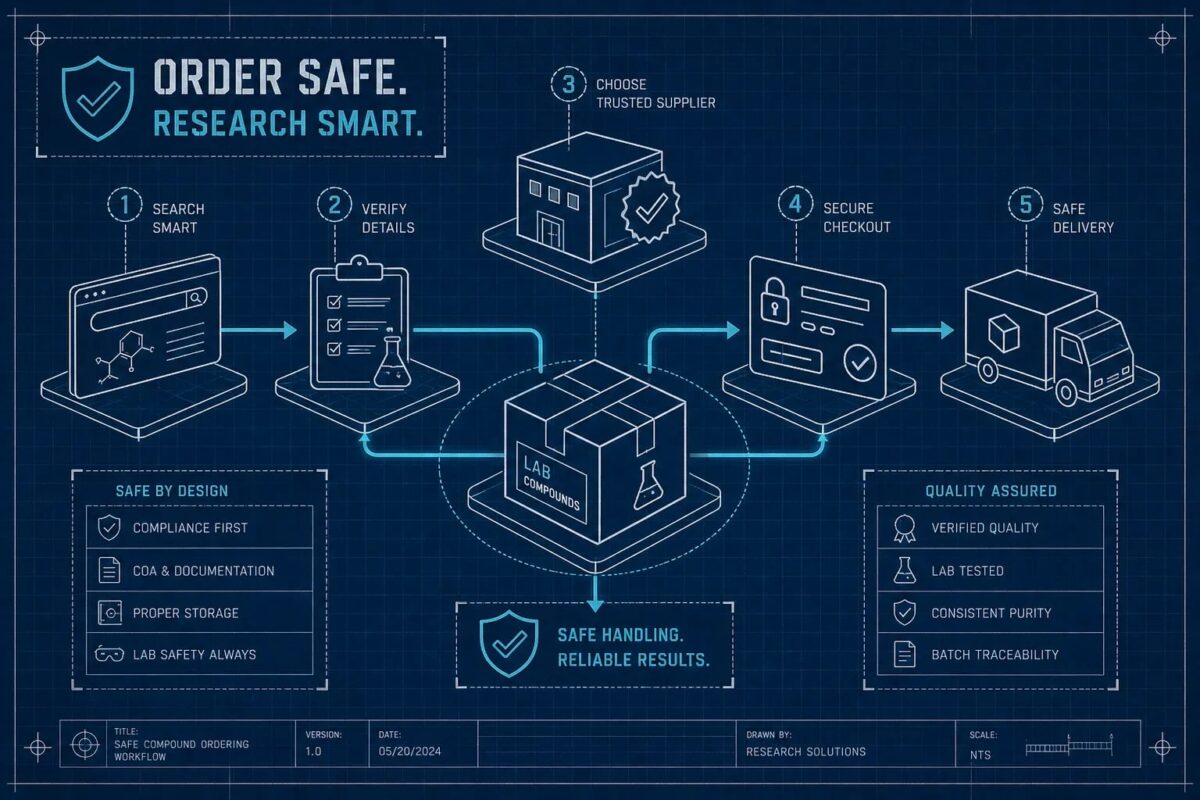
Safe lab compound ordering starts long before checkout, a few clicks and a shipping address are not a procurement process. The risks from unverified platforms, missing documentation, and mislabeled compounds are real: they create compliance exposure, downstream liability, and in the worst cases, physical harm to the people handling the materials. Speed has nothing to do with safety, and treating them as equivalent is where most procurement problems begin.
This process is a system, not a single decision. It starts well before you reach a checkout page and ends long after the package arrives. Research Chem Hub has structured its operation around the kind of accountability this guide covers, including a manual pre-listing review and an internal confirmation stage before fulfillment. That structure exists because the process demands it.
What follows is a repeatable, compliance-minded framework you can apply to any lab compound purchase: how to vet suppliers, what documents to review before ordering, how to conduct a proper receiving inspection, and how to close out the procurement process with storage and labeling that holds up to audit.
How to verify a supplier for safe lab compound ordering
Supplier verification is the foundation of the entire process. Every downstream step, from SDS review to receiving inspection, depends on the reliability of the source. Unverified platforms can ship mislabeled compounds, provide outdated or generic documentation, or operate without a traceable U.S. business address. Under regulations such as TSCA, compliance exposure often falls on the purchasing institution, not the supplier, so gaps in supplier accountability become your lab’s problem to resolve.
Legitimacy signals to look for on a supplier platform
Start with the basics: a verified U.S. business address, clear research-use-only labeling across all product listings, and consistent naming conventions throughout the catalog. Inconsistent or variable terminology for the same compound class may indicate weak listing controls; ask the supplier for standardized identifiers such as CAS numbers, catalog numbers, and lot-level documentation. Also look for evidence of a manual pre-listing review, because platforms that publish listings without internal verification create the most documentation risk.
Beyond the platform itself, request a current Certificate of Analysis, a Safety Data Sheet, and any applicable TSCA compliance documentation before committing to a vendor relationship. For higher-risk or controlled materials, verify DEA registration status. The absence of any of these is a flag, not a minor inconvenience.
U.S.-based vs. overseas suppliers: what changes for your lab
Sourcing domestically changes several things at once. A U.S.-based supplier with a verified physical address is traceable and accountable under U.S. law. International vendors are generally harder to hold to those same standards. Overseas shipments also introduce TSCA import certification requirements: chemicals entering the U.S. must be certified as TSCA-compliant, and that burden falls on the importer when the supplier does not handle it correctly. Recourse in disputes with foreign entities varies widely depending on contract terms, governing law, and whether the supplier has any U.S. presence.
Domestic sourcing also reduces shipping time and the risk of temperature excursions or customs delays that can compromise compound integrity. For researchers at U.S. institutions who need reliable, documented supply chains, a verified domestic supplier is generally the more practical choice.
Account setup and pre-order documentation requirements
Before you reach a checkout page, your lab needs a documentation baseline, knowing what a legitimate supplier will require from you and having those materials ready in advance saves time and prevents compliance gaps at the point of ordering.
What a responsible supplier platform should require from you
Reputable platforms typically require some form of account verification before allowing you to place orders. That usually includes institutional affiliation confirmation, a research-use acknowledgment, and in some cases identity or purpose verification, requirements aligned with responsible supplier qualification practices. These steps ensure compounds reach appropriate research contexts. A platform with no account verification has no mechanism to confirm compounds are going where they should; that absence is a process gap, not a convenience feature.
The researcher’s pre-order documentation checklist
On your end, have the following ready before you initiate any order:
- Institutional or lab credentials confirming your research affiliation
- A clear statement of research context or purpose, especially for specialized compounds
- Internal procurement authorization if your institution requires purchase approval
- A copy of your lab’s chemical hygiene plan or relevant SOP if the supplier requests it
Note that supplier requirements and institutional requirements are two separate compliance layers. Meeting one does not automatically satisfy the other. Know both before you order.
SDS and CoA review for safe lab compound ordering
Skipping the SDS and CoA review before checkout is a common and risky compliance shortcut in lab procurement. It is also the one most likely to surface problems after delivery, when options for resolution are more limited.
Key SDS items to verify for every compound
The SDS must match the exact product you are ordering. Check the product identifier and chemical name against what appears on the listing. Confirm the hazard classification, signal words, and pictograms are present and consistent with the compound class. Review the composition section for CAS numbers and concentration ranges. Verify that handling, storage, and PPE requirements are clearly stated. Then check the revision date. An outdated SDS is grounds to pause the order and request a current version before proceeding.
What a valid CoA should confirm before you finalize
The CoA must be lot-specific. A generic document not tied to the exact batch you are purchasing does not satisfy compliant procurement requirements. Verify that the product name and catalog number on the CoA match your order exactly. Confirm the lot or batch number corresponds to the specific container you will receive. Check that test results and purity figures fall within the stated specification limits, that a date of analysis is present, and that a qualified supplier representative has signed off on the document. Any mismatch between the CoA and the order is a reason to stop and resolve the discrepancy before the order moves forward.
The ordering and checkout process: where accountability gets built in
In practice, many ordering problems surface after delivery, when reversing course is harder and more expensive. A well-structured checkout process prevents this by building verification into the transaction itself rather than treating it as an afterthought.
What a controlled checkout system looks like
An accountable checkout process captures research context as part of the order, not just billing and shipping information. It presents product descriptions with explicit research-use framing so there is no ambiguity about the intended application. It also includes a review stage before the order is released for fulfillment. High-volume chemical listing platforms that prioritize catalog breadth over process control tend not to operate this way, when throughput is the priority, lot-level CoA checks and pre-fulfillment review steps are often the first things cut.
Why Research Chem Hub’s internal confirmation stage matters
Research Chem Hub incorporates an internal confirmation stage between order submission and fulfillment. This review step creates a documented checkpoint that catches discrepancies, confirms the order against product and account records, and verifies that the compound is going to an appropriate research context before it ships. A pre-fulfillment confirmation stage is the standard worth holding any platform to. It mirrors how compliance-conscious labs treat their own internal purchase authorization controls, and it gives errors a structured opportunity to be caught before they become physical inventory problems.
Receiving and inspecting your shipment the right way
A shipment that clears every online verification step can still arrive compromised. The receiving process is where documentation meets physical reality, and it requires a specific protocol to produce anything useful for your records.
The post-delivery inspection protocol
Before signing for any shipment, inspect the exterior packaging for visible damage, leakage, or compromised sealing. Do not accept packages that are clearly damaged or leaking; return them to the carrier and contact the supplier before taking any further action. Once accepted, open the shipment in a designated receiving area using appropriate PPE for the compound class. Volatile or highly reactive materials should be opened in a fume hood or other ventilated controlled space.
Check every inner container: confirm it is sealed, intact, and labeled correctly with an accurate chemical name. Match the lot number on the physical container to the lot number on the CoA you reviewed before ordering. A mismatch means you have received a different batch than what was documented. Isolate the container, document the discrepancy in writing, and contact the supplier before the compound enters your inventory or storage system.
Documentation at the point of receipt
Documentation at receipt is what turns an informal unpacking into an auditable process. Date each container on arrival. Log it into your chemical inventory immediately, including the lot number, supplier, quantity, and condition on arrival. Link the SDS record to the inventory entry so hazard information stays connected to the physical item. This step is not optional for compliant procurement; it is the record that makes everything before it traceable.
Storage, labeling, and segregation after delivery
The procurement process does not end when the compound enters your building. How it is stored, labeled, and segregated determines whether the compliance work done upstream actually protects your lab on a day-to-day basis.
Storing compounds by hazard class
Store by hazard compatibility, not alphabetically. Flammables go in rated flammable-storage cabinets, away from oxidizers, heat sources, and ignition risks. If cold storage is required for a flammable compound, use only a refrigerator or freezer specifically rated for flammable storage, standard lab refrigerators are not acceptable. Corrosives should be stored below eye level with secondary containment in place for liquid forms, and acids and bases should be segregated within the corrosives category. Remove all shipping boxes and packing materials from storage areas immediately after unpacking; cardboard and foam are combustible and have no place in chemical storage.
Labeling and inventory entry as the accountability close-out
Every container must leave the receiving process with two things intact: the manufacturer’s label, which should never be removed or defaced, and any internal labels required by your lab’s chemical hygiene policy. Internal labels should include the receipt date, the date opened where applicable, and any hazard flags the lab has standardized. When those labels are in place and the inventory entry is complete, the procurement process has a documented close-out. The chain from supplier verification through storage labeling is on record and repeatable.
Build a repeatable system for safe lab compound ordering
When supplier verification, documentation review, controlled checkout, receiving inspection, and storage labeling are treated as a linked sequence rather than isolated tasks, the entire procurement chain becomes traceable and defensible. Each step depends on the one before it. Skipping any one of them creates a gap the others cannot fill.
Research Chem Hub was built around exactly these standards. Its manual pre-listing review process and pre-fulfillment confirmation stage reflect a third accountability layer that most high-volume platforms do not build in: a documented internal checkpoint between what a customer orders and what physically ships. When you are evaluating any supplier platform, those controls, and the documentation practices around them, are the benchmarks worth measuring against.
Use this guide as the foundation for a written SOP in your own lab. Consolidate the supplier verification checklist, the SDS and CoA review criteria, the receiving protocol, and the storage rules into a single document your team can follow consistently. When every procurement decision runs through the same documented process, the result is a lab that can demonstrate compliance, not just describe it.
