
Buy Research chemicals Online
Safe Lab Compound Ordering: What Researchers Must Know
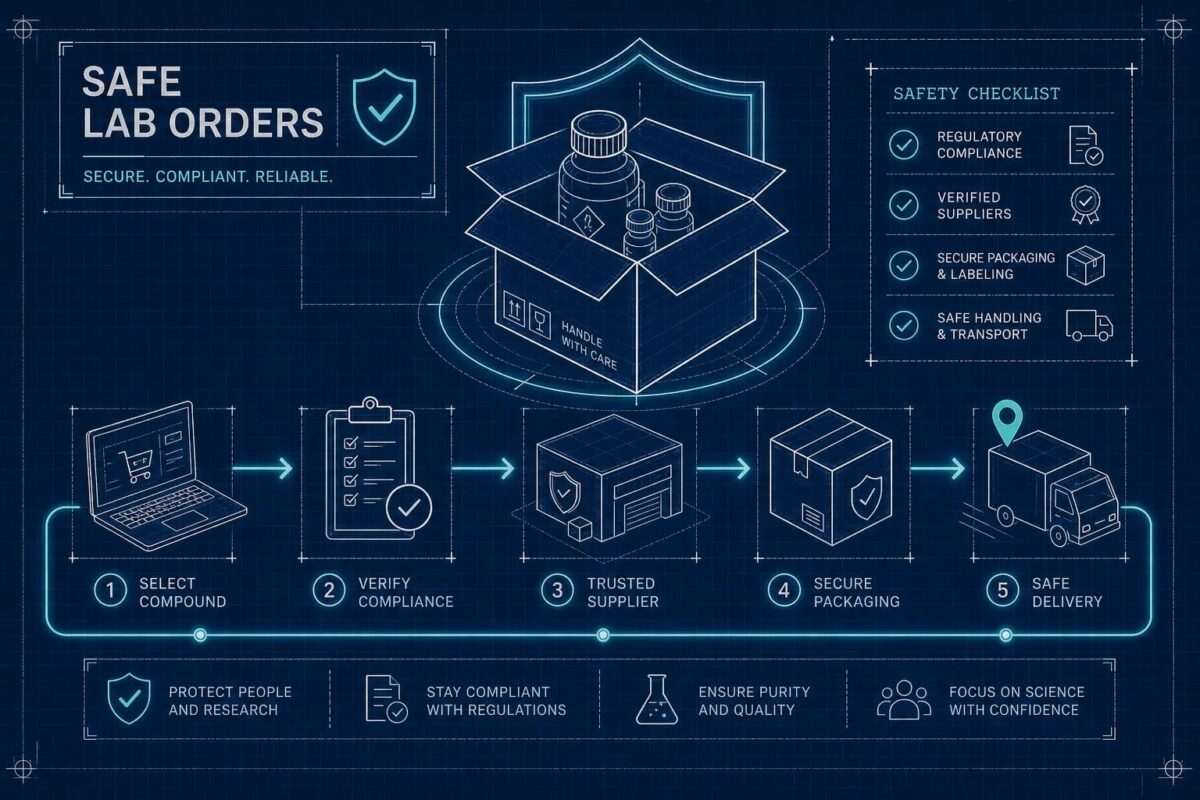
Sep
Safe lab compound ordering is where many researchers lose ground before their work even begins. Hours go into evaluating compound purity, reviewing literature, and confirming source material, then the actual ordering process gets waved through with little scrutiny. That’s where compliance failures happen, and that’s where otherwise solid research gets compromised at the starting line.
Safe lab compound ordering isn’t just about what ends up in the vial. It’s about the platform structure you order from, the documentation you bring to the transaction, and the operational transparency of the supplier you’re trusting with your research materials. Research Chem Hub, a US-based supply platform, is built around exactly this kind of structured ordering environment, that’s the benchmark this article uses throughout. What follows covers how to verify a supplier, what research-use-only restrictions actually demand of you, how to prepare your documentation before checkout, and which red flags should stop an order cold.
Why the ordering process carries as much risk as the compound itself
Research chemicals exist on a wide spectrum of regulatory standing. A compound appearing on a supplier’s site doesn’t mean it’s appropriate for your specific research context, your institution’s approved scope, or your lab’s procurement policies. The sourcing decision, and how it’s made, carries real consequences for you, your institution, and the integrity of your work. “Available” and “appropriate” are two very different things.
Poor ordering practices create downstream problems that aren’t obvious at purchase time. Incomplete records make reordering difficult when a study needs to be replicated. Suppliers without verifiable credentials create traceability gaps that can’t be closed after the fact. Informal checkout processes leave no paper trail. These issues surface during audits, grant reviews, and institutional procurement reviews, not during the original order, when fixing them would have been easy. The ordering process is where you either build a defensible research record or begin accumulating problems you’ll deal with later.
Safe Lab Compound Ordering: Supplier Verification
A legitimate research chemical platform has a verifiable US business address, not just a contact form or a generic email. Domestic sourcing matters for concrete reasons: shipping reliability within a known logistics system, direct accountability under US law, and alignment with the compliance standards your institution expects. A physical, traceable US presence is a meaningful differentiator when you’re building a research record that has to survive scrutiny.
Next, look at how the supplier lists its products. Legitimate platforms use fixed naming conventions, consistent categorization, and clear research-use-only labeling across every listing, not ad-hoc descriptions that change between products or vague labels that shift from page to page. Inconsistent product descriptions signal that the platform lacks internal quality controls. If they can’t maintain basic listing integrity, they almost certainly can’t maintain the documentation integrity your research requires.
A third indicator is whether the platform runs a manual verification process before listing products. Platforms that put compounds through a pre-listing review, checking category placement, naming conventions, and consistency before anything goes live, demonstrate operational discipline that high-volume listing sites typically don’t. This internal check is how you distinguish a platform built for researchers from one built purely for volume. The difference shows up in the product data you rely on when reordering or citing your source material.
What research-use-only restrictions actually require from you
The “research use only” designation isn’t boilerplate. It’s a legal framing that creates real obligations for the buyer, not just the seller. Research-use-only compounds are not for human or veterinary consumption, and their purchase is conditioned on intended use within a research or laboratory environment. If you’re ordering these materials, you’re accepting that responsibility explicitly, whether or not you’ve read the fine print.
Researchers ordering on behalf of an institution carry the additional responsibility of ensuring the purchase aligns with their lab’s approved research scope. In practice, this typically means securing internal approval for the compound category before placing the order and confirming the purchase aligns with institutional procurement policies. For certain categories, documentation of the research purpose on file is also required, particularly for controlled-substance analogs or compounds under active federal scheduling review. A supplier asking for institutional affiliation isn’t being difficult. They’re running the eligibility check that a compliant platform is supposed to run.
Certain compound categories attract more regulatory attention even when labeled for research use. Psychedelic research compounds, including lysergamides and phenethylamines, require especially deliberate supplier selection and documentation, given DEA scheduling considerations and heightened scrutiny for compounds with psychoactive analogs. Researchers working in these areas should treat the sourcing process as part of the research methodology, not an administrative afterthought. The same rigor you apply to your experimental design belongs in your procurement process.
Documentation you need in place before you ever reach checkout
COA, beyond-use dating, and batch testing for safe lab compound ordering
Before you start a checkout process, have your institutional affiliation and intended use information ready. Legitimate platforms will request or confirm this, particularly for compounds in closely monitored categories. If a platform never asks for any of this and has no confirmation mechanism built in, that’s a gap in their operational controls, not evidence that the order is straightforward. Friction at checkout is often a sign of a responsible platform, not a problematic one.
Every order you place should correspond to an internal record created before the order is submitted. Document the research purpose, the specific compound, the quantity, the supplier, and the expected delivery timeline. These records matter when justifying purchases during budget reviews or compliance audits, and they matter even more if something goes wrong with the order or the research itself. A missing paper trail is almost impossible to reconstruct after the fact, so build it before you reach checkout.
Understand what documentation you should receive alongside the product. A Certificate of Analysis (COA)with batch-specific lot numbers confirms purity and identity for that exact batch. This is where lot traceability becomes critical: if a supplier can’t provide batch-specific COA data on request, the product’s integrity is unverifiable. No serious research lab should accept that. Ask for it before you order to confirm the supplier can actually deliver it, rather than discovering the gap after the compound is already in your lab. For longer-shelf-life compounds, also confirm that beyond-use dating information is included, this is standard practice for properly documented research materials.
What a compliant online checkout looks like in practice
Most online platforms run a frictionless checkout: add to cart, pay, ship. A compliant research chemical platform builds deliberate friction into that process, specifically, a confirmation stage before fulfillment that creates space for internal review and prevents orders from processing as simple retail transactions. This protects both the buyer and the platform by treating checkout as a compliance checkpoint rather than just a payment gateway.
Research Chem Hub uses a controlled checkout-based ordering process with an internal confirmation stage before any order moves to fulfillment. Orders aren’t processed as consumer retail. The structure reflects a platform designed with operational accountability in mind, where the ordering process itself functions as a checkpoint. That’s not a barrier to legitimate research; it’s a signal that the platform takes its compliance obligations seriously.
From the researcher’s perspective, this kind of checkout feels slightly more deliberate than a standard e-commerce experience. It should. The additional step signals that the supplier is doing its part of the due diligence rather than offloading all compliance responsibility onto the buyer. When you encounter this structure, treat it as a positive indicator in your supplier evaluation, not a source of frustration.
Red flags that should stop you from completing an order
If a supplier operates with no physical address, no named founders or operators, and no verifiable US business registration, stop before you get to checkout. Anonymous overseas suppliers introduce compliance risk, shipping uncertainty, and zero accountability if something goes wrong with your order or your compound. There’s no recourse and no paper trail to reconstruct. The price savings aren’t worth the operational and institutional exposure.
Watch how the platform handles product listings. A supplier that doesn’t consistently label compounds as research-use-only, or that uses vague descriptions without fixed naming conventions, is signaling weak internal controls. You can’t build a defensible research record on a purchase from a platform that can’t maintain basic listing integrity, and inconsistent product information is a direct window into how the rest of their operations are run.
The following are the clearest red flags to act on immediately:
- No Certificate of Analysis available, or only generic COAs without batch-specific lot numbers
- Checkout process indistinguishable from a general retail store, with no confirmation stage
- No physical address or verifiable domestic business registration
- Product descriptions that imply human use, clinical effects, or consumer-wellness framing
- Pricing dramatically below market with no explanation of sourcing or batch testing methods
- Inability or refusal to answer direct questions about API sourcing, testing methods, or lot traceability
Legitimate platforms expect due diligence questions. They have answers ready because their operations can withstand the scrutiny. Evasion on basic documentation or sourcing questions tells you exactly how seriously that supplier treats its compliance obligations.
Start your next order the right way
Safe lab compound ordering is a process, not a single decision. It starts with choosing a supplier that has demonstrable operational controls and ends with documentation that can survive an audit, a grant review, or an institutional compliance check. Researchers who treat the ordering process with the same rigor they apply to the research itself protect their work, their institutions, and their professional standing, because documentation gaps are far harder to close after the fact than they are to prevent upfront.
Platforms built with structural accountability set a different standard. Research Chem Hub’s manual review system, verified US presence, consistent research-use-only labeling, and controlled checkout with an internal confirmation stage represent what a responsible ordering environment looks like. That structure exists to support legitimate researchers, not complicate their process. It’s a standard worth measuring other suppliers against before you place an order.
Before your next order, run through the verification and documentation steps outlined in this article. Confirm the supplier’s physical address and domestic presence. Check their labeling consistency and pre-listing review practices. Have your institutional affiliation and intended use records ready before you reach checkout. Request the COA, including batch-specific lot numbers and beyond-use dating information, before you commit. Ordering lab compounds safely is a workflow, and like any workflow, it gets faster once you’ve built the habit. If you have questions about a specific compound category or documentation requirements, the Research Chem Hub team can help before you place an order.
