
Buy Research chemicals Online
How to Buy Research Chemicals Online in the USA Safely
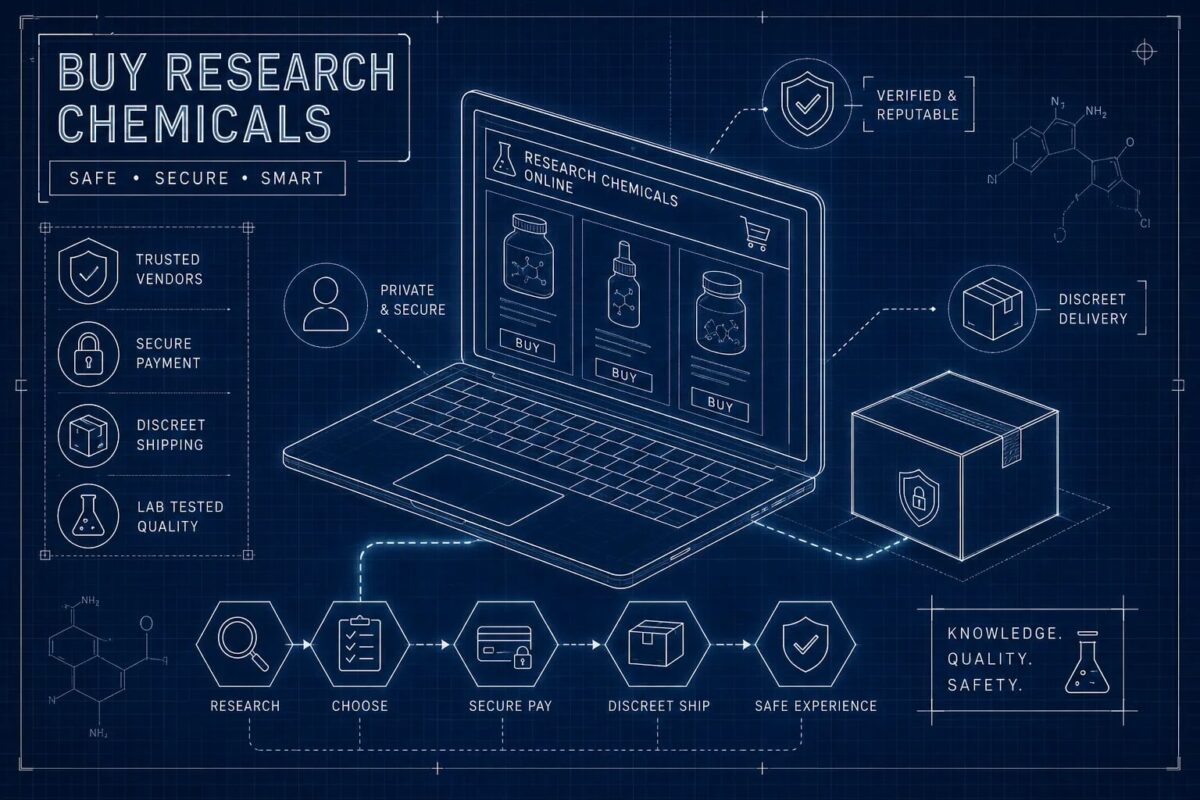
Sep
If you want to buy research chemicals online in the USA, you need to clear three hurdles before placing an order: the regulatory framework, supplier legitimacy, and shipping compliance. Many buyers searching for research-grade chemicals online focus entirely on price and availability. They skim the supplier’s website and assume a professional-looking storefront signals a legitimate operation. That’s where things go wrong. Buying lab compounds online in the USA is governed by a layered system of federal and state law, and the consequences of getting it wrong can include customs detentions, enforcement actions, and DEA inquiries you’d rather not have. This guide covers what actually matters before you purchase compounds for laboratory use: the legal framework, what credible suppliers require, how to evaluate vendor legitimacy, and how to navigate COAs and hazardous shipping.
Even the best supplier can’t protect a buyer who hasn’t done their own compliance homework. Follow this, and you buy with confidence instead of guesswork.
The legal framework you can’t afford to ignore
How the Controlled Substances Act and DEA draw the line
The primary federal law governing research chemical purchases is the Controlled Substances Act, codified in 21 U.S.C. and enforced through DEA regulations in Title 21 of the Code of Federal Regulations. If a compound is scheduled under the CSA, the DEA controls who can purchase, possess, store, and use it. Entities engaged in manufacturing, distributing, or dispensing scheduled substances generally must hold a DEA registration before doing any of that.
There’s a distinction worth understanding: DEA List I and List II chemicals are regulated precursor chemicals, not controlled substances themselves. Researchers purchasing listed chemicals are generally not required to hold a DEA controlled-substance registration. However, suppliers will still request documentation confirming legitimate research use, and those requests carry real weight. “Research use only” labeling on a product does not grant legal protection under federal law if intent of human use can be demonstrated. That framing is a supplier notation, not a legal shield for buyers.
Why state laws add a separate compliance layer
Federal rules are the floor, not the ceiling. States operate their own controlled-substance acts and precursor-chemical laws that can impose additional licensing, reporting, and authorization requirements entirely independent of what the DEA requires. A purchase that clears federal rules without any registration requirement may still face significant state-level barriers depending on where you’re located.
California is one of the more stringent examples: researchers working with controlled substances or precursor chemicals often need pre-authorization through their institution before ordering, and the state’s precursor permit requirements apply alongside federal rules. Some states require pharmacy board licensing for certain research activities. If you’re ordering pharmaceutical research chemicals or bioactive compounds from any U.S. supplier, verify your specific state’s laws before assuming federal compliance is enough.
What suppliers will actually ask you to provide
When DEA registration is required and when it isn’t
DEA registration is mandatory when your activity involves manufacturing, distributing, dispensing, or specific research activities with scheduled controlled substances. For Schedule I compounds, the bar is even higher: you need a specific research registration tied to that substance, not just a general controlled-substance registration. Each physical location where controlled substances are handled typically requires its own separate DEA registration.
For DEA-listed precursor chemicals, ordinary research labs are not required to hold a DEA registration to purchase or possess them. Suppliers will still ask for documentation. That’s not the same as needing a federal license. Know the difference before you approach a vendor, because confusing the two creates unnecessary friction on both sides of the transaction.
The documentation trail for institutional and independent buyers
Institutional buyers at universities or research facilities typically route controlled-substance purchases through an authorized senior buyer, submit a Controlled Substance Purchase Approval Form signed by the PI, and may need to provide NRC license numbers, IACUC documentation for in vivo studies, or a specific FedEx or UPS account number for regulated shipments. These aren’t bureaucratic obstacles. They’re the paper trail that protects everyone involved when a purchase is scrutinized later.
Independent researchers face a different set of requirements. Reputable U.S. chemical suppliers will request a detailed statement of intended research purpose, account verification steps, and sometimes a signed affirmation of legitimate use. Some suppliers require additional documentation specific to the compound class. If a vendor asks for nothing at all, that’s not a convenience. That’s a red flag worth taking seriously.
How to buy research chemicals online in the USA from a legitimate vendor
Structural signals that indicate a credible operation
A legitimate vendor maintains category-based navigation, consistent product naming conventions, and a documented pre-listing review process. These structural elements aren’t cosmetic. They signal that someone is accountable for what gets listed and how it’s described. An unverifiable product dump with inconsistent names and no review process tells you that accountability ends at the checkout button.
Research Chem Hub operates from a U.S. base with a verifiable operational presence and a structured listing environment, which separates it from anonymous overseas operations with no traceable accountability. When a supplier controls what gets listed and reviews orders before fulfillment, they’re extending a level of operational discipline that protects buyers as much as it protects the platform. Structured checkout processes with internal confirmation stages before fulfillment are a practical trust signal, look for suppliers where a human reviews the order before it ships.
Red flags that should stop you before you click “buy”
There are vendors in this market that look professional enough to pass a quick glance but fail every practical credibility test. If you see any of the following, walk away before you commit:
- No verifiable, lot-specific COA access or documentation on the product page
- No physical U.S. address or traceable operational presence
- Inconsistent or non-standard product naming that prevents independent verification
- Payment restricted to untraceable methods only, with no dispute or recourse options
- No documentation requirements from the buyer whatsoever
The last point matters most. A vendor that asks for nothing is one that has no interest in knowing what the compound is used for. That’s not a supplier you want in your chain of custody.
Why the vendor’s verification process protects you, not just them
Suppliers that require documentation from buyers are doing more than covering themselves legally. They’re creating a paper trail that documents your legitimate research purpose. If that purchase is ever examined, your documentation is your defense. Responsible chemical suppliers should be seen as partners in compliance, not gatekeepers. The friction in the process is the point.
Reading a certificate of analysis before you buy research chemicals online
Purity grades and what they actually mean for your work
ACS reagent grade meets American Chemical Society analytical specifications and is used for standard lab and analytical work. USP and NF grades meet pharmacopeial standards for pharmaceutical applications and compendial methods. Laboratory and technical grades carry less tightly defined purity limits and are appropriate for routine or lower-sensitivity tasks. High-purity and spectrophotometric grades are designed for trace analysis where even low-level contamination from metals, organics, or moisture affects results.
Purity is not just a percentage. It tells you which specific impurities were controlled, by which analytical method, and to what limit. A compound listed at 99% purity with no impurity panel may still contain trace metals or residual solvents that break a sensitive assay. Choose the tightest grade your method actually requires; using a tighter grade than necessary rarely hurts, but using a looser one when your method demands precision costs you more than the price difference.
The key fields to verify on every COA
Every COA you receive should confirm the compound’s identity through a recognized method: IR, NMR, HPLC, or mass spectrometry. The assay or purity value should state its basis clearly, whether that’s weight-for-weight, anhydrous, or as-is. Without that specification, you can’t compare values across suppliers or lots. The impurity panel should list specific contaminants measured, including trace metals, residual solvents, and water content, with acceptance criteria stated.
For cell culture or bioactive compounds, confirm the COA includes sterility, endotoxin, and mycoplasma data. The lot number and batch-specific testing date should appear on the document, a generic COA not tied to your specific lot tells you nothing about what’s actually in the container you’re ordering. If the analytical method and detection limits aren’t stated, the purity numbers are unverifiable. That’s a document you shouldn’t accept regardless of how clean the number looks.
Shipping when you buy research chemicals online in the USA
Which carriers handle hazardous research materials and what they restrict
FedEx is widely used for domestic hazardous research chemical shipments at institutional and commercial levels, particularly among university procurement offices. Shipments must comply with 49 CFR, and FedEx requires prior approval before accepting hazardous materials. FedEx does not accept certain hazard classes, including Class 2.3 poisonous gases, Class 4.2 spontaneously combustible materials, Class 6.1 inhalation hazard materials, and Class 6.2 infectious substances. Hazardous material shipments cannot go to, from, or within Alaska or Hawaii under FedEx’s program.
UPS operates a separate hazardous materials program that requires a specific hazmat agreement for regulated shipments. Some limited-quantity ground shipments may qualify for exemptions from shipping papers. Specialized LTL carriers like XPO, Estes, and Old Dominion handle larger chemical shipments with their own hazmat programs. Confirm carrier eligibility for your specific compound and hazard class before placing the order, not after.
Packaging standards, documentation, and import/export realities
Hazardous research chemicals must ship in UN-certified packaging matched to the compound’s hazard class and packing group. Packages must be correctly marked, labeled, and accompanied by DOT-compliant shipping papers. Air shipments require compliance with IATA Dangerous Goods Regulations and ICAO Technical Instructions on top of DOT requirements, which are stricter than ground shipment rules.
For international shipments, compliance with both origin and destination country rules is required. A commercial invoice, clear content description, and a customs statement indicating research-only purpose are standard. Confirm the recipient has any necessary local permits or customs clearances before the shipment goes out. Delays from missing paperwork are the buyer’s problem, not the carrier’s. Some states also impose transport permit requirements for specific materials within the U.S., so don’t assume domestic automatically means unrestricted.
A pre-purchase checklist for buying research chemicals online in the USA
Legal and compliance steps before you order
Confirm whether the compound is a scheduled controlled substance, a DEA-listed precursor chemical, or an unscheduled research reagent. Each category carries different regulatory obligations, and conflating them causes real problems downstream. Check your state’s controlled-substance and precursor-chemical laws specifically for your location, not just the federal rules. Determine whether your intended use requires DEA registration or a state-level authorization before procurement.
Supplier and documentation verification
Verify the supplier has a confirmed U.S. physical address and traceable operational presence. Request a lot-specific COA before purchase and confirm it includes identity confirmation, assay basis, impurity panel, and analytical method. Confirm SDS availability for your compound and check whether the supplier’s checkout process includes a confirmation stage and documentation review before fulfillment. Research Chem Hub builds that confirmation stage into its standard process, making it a practical choice for buyers who want a structured, documented transaction.
Order and shipping preparation
Identify the appropriate carrier for your hazard class and packing group before submitting the order. Confirm the supplier uses UN-certified packaging and provides DOT-compliant shipping documentation with every shipment. Institutional buyers should route the order through their authorized senior buyer or PI-signed approval form before submission. Keep all documentation, including the COA, purchase order, and use statements, on file for the full duration of the research project.
The short version
When you buy research chemicals online in the USA, three things determine whether the transaction holds up: legal compliance, supplier credibility, and documentation. The legal layer comes first, understand what you’re buying, who regulates it, and what your state requires on top of federal rules. Then evaluate suppliers the way you’d evaluate any serious business partner. Research chemical vendors with transparent processes, verifiable U.S.-based operations, and research-grade chemicals for sale under documented review protocols are the ones worth trusting.
Verify every COA before you commit. Lock in your shipping pathway. Keep your documentation tight. When you follow that sequence, you’re buying research chemicals online in the USA in a way that holds up if anyone ever asks questions.
Read More: researchchemhub.com/blog/are-research-chemicals-legal-in-the-united-states/
